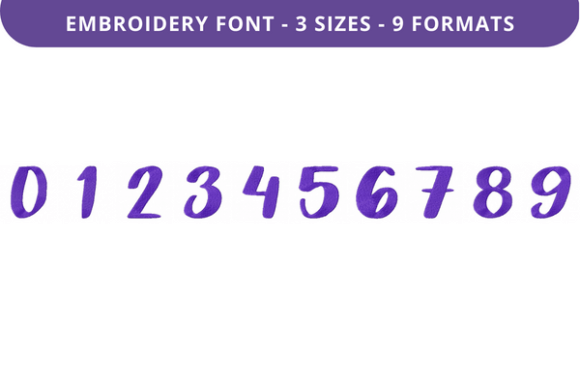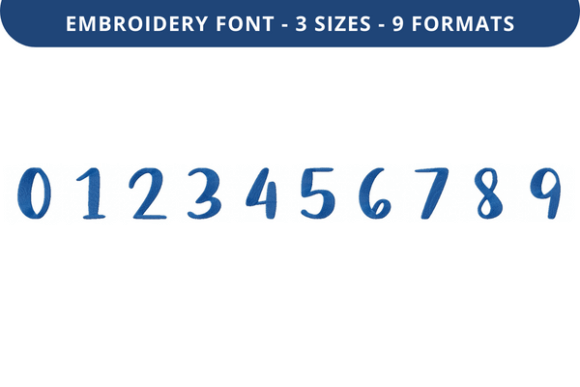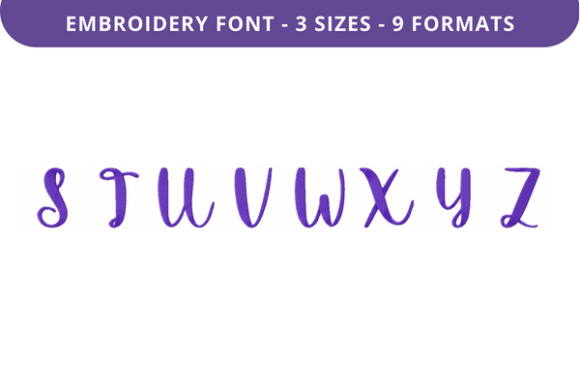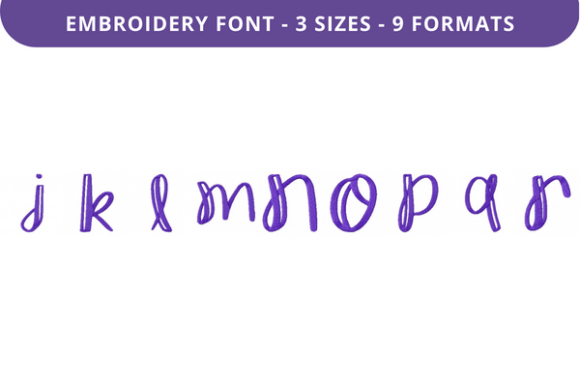
Old English Font JKL: A Premium Embroidery Font for Timeless Personalization
When it comes to adding elegance, tradition, and personality to fabric-based projects, few design elements carry the same visual weight and emotional resonance as an Old English font. The Old English Font JKL stands out not just for its classic aesthetic—but for its practical excellence as a high-quality machine embroidery font. Designed specifically for seamless digitization and precise stitching, this font transforms simple text—names, dates, quotes, monograms—into heirloom-worthy embellishments on apparel, home linens, gifts, and more.
What Is Old English Font JKL?
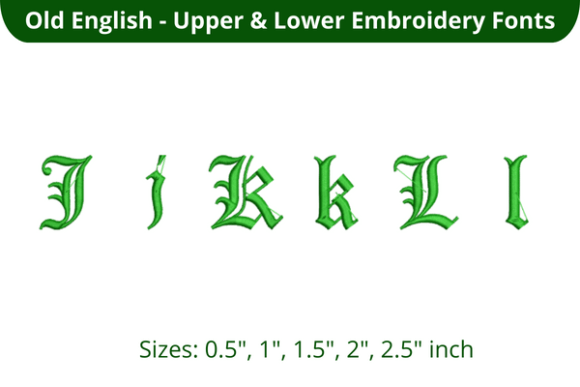
Old English Font JKL is a meticulously crafted embroidery-specific font, inspired by the ornate, angular letterforms of medieval Blackletter script—but optimized for modern embroidery machines. Unlike standard TrueType or OpenType fonts you’d use in word processors or graphic design software, this is a digitized embroidery design, meaning each character is pre-converted into stitch paths that tell your machine exactly where and how to sew.
It’s not merely a decorative typeface—it’s a functional, production-ready asset. Every letter has been engineered with balanced density, consistent stitch angles, and appropriate underlay to prevent puckering, thread breaks, or distortion—even on delicate fabrics like silk, lightweight cotton, or knits.
Why “JKL” in the Name?
The “JKL” designation isn’t arbitrary—it signals versioning and compatibility. This particular iteration includes expanded character sets (including numerals, punctuation, and accented letters), refined kerning between characters, and tested scalability across sizes from 1 inch to over 4 inches tall. It also reflects ongoing updates based on real-world user feedback—making it one of the most reliable Old English options available for both hobbyists and small-batch embroiderers.
Purpose and Practical Relevance
At its core, the purpose of Old English Font JKL is personalization through precision. Whether you’re stitching a baby’s name onto a baptismal gown, commemorating a wedding date on linen napkins, or adding a meaningful quote to a graduation stole, this font delivers sophistication without sacrificing legibility or stitch integrity.
Its relevance extends across multiple domains:
- Craft & Hobbyists: Ideal for makers using Brother, Janome, Bernina, or Baby Lock machines who want professional results without hiring a digitizer.
- Small Businesses: Boutique apparel brands, custom gift shops, and monogramming services use it to maintain brand consistency while scaling personalized offerings.
- Education & Clubs: Sewing and textiles instructors incorporate it into curriculum to teach digitizing fundamentals, file management, and fabric stabilization techniques.
- Event Planners & Wedding Professionals: Enables quick turnaround on coordinated fabric signage, table runners, and keepsake items—all with cohesive, timeless typography.
Multiple File Formats = Maximum Machine Compatibility
A key strength of Old English Font JKL is its inclusive file support. It ships with industry-standard embroidery formats—including .PES (Brother & Baby Lock), .JEF (Janome), .HUS (Viking/Husqvarna), .VP3 (Viking), .DST (Tajima-compatible, widely used in commercial setups), and .EXP (Melco). Some packages even include .SVG and .DXF for hybrid workflows involving cutting machines or vector editing.
This multi-format approach eliminates guesswork and conversion errors. You don’t need third-party software to translate files—and you avoid the common pitfall of distorted letter spacing or missing characters that plague poorly adapted fonts.
How It Fits Into Modern Embroidery Workflows
Today’s embroidery isn’t just about stitching—it’s about integration. Designers use tools like Embrilliance, Wilcom E4, or Hatch to combine fonts with motifs, adjust density, or layer text over appliqués. Old English Font JKL was built with these ecosystems in mind. Its clean anchor points, logical object grouping, and modular construction make it easy to:
- Resize without recalculating stitches manually,
- Combine with borders or frames using auto-trim features,
- Convert to satin-stitch outlines for standalone monograms,
- Import into cloud-based platforms like CloudPebble or StitchBuddy for remote machine control.
In short: it respects both the craft and the technology behind it.
Common Misconceptions—Clarified
Misconception #1: “Any decorative font can be used for embroidery.”
Not true. Standard fonts lack stitch logic. Converting them via auto-digitizing tools often yields jagged edges, inconsistent fill density, or unreadable small caps. Old English Font JKL avoids this because it was designed as embroidery first, not adapted after the fact.
Misconception #2: “Old English styles are hard to read.”
While traditional Blackletter can appear dense, JKL’s version uses strategic simplification—widened counters (the open spaces inside letters like ‘e’ or ‘o’), softened terminals, and generous letter spacing—to enhance clarity without losing character.
Misconception #3: “One size fits all fabrics.”
The font includes guidance for fabric-specific adjustments—like recommending reduced density for towels or increased underlay for stretchy knits. It empowers users to adapt intelligently rather than guessing.
Real-World Examples You Can Try Today
Here’s how crafters and pros are putting Old English Font JKL to work:
- Baby Memory Quilts: Stitching birth names and dates in soft pastel threads on Minky fabric—using the 1.5-inch height setting for crisp definition.
- Barbershop Towels: Adding shop logos and slogans (“Est. 1987”) with gold metallic thread on heavy cotton—leveraging the .DST format for flawless multi-needle execution.
- University Graduation Stoles: Embroidering degree names and Latin honors on satin-backed stoles—where the font’s vertical emphasis reinforces academic gravitas.
- Historic Reenactment Garb: Replicating period-appropriate inscriptions on leather-bound journals or wool tunics—thanks to its authentic yet wearable proportions.
Getting Started: Tips for Best Results
To maximize your experience with Old English Font JKL:
- Stabilize wisely: Use medium-weight cutaway stabilizer for woven fabrics; tear-away works well for stable quilting cottons.
- Test first: Always run a sample on scrap fabric matching your final project’s weight and stretch.
- Thread matters: Rayon or polyester embroidery thread provides sheen and durability; avoid low-quality cotton that frays mid-stitch.
- Hooping technique: Ensure fabric is drum-tight—especially important for tall, narrow letters like ‘l’, ‘t’, or ‘h’ which rely on tension for shape retention.
Why Choose Quality Over Quick Fixes?
In an era of AI-generated designs and instant downloads, it’s tempting to grab free fonts promising “Old English style.” But quality embroidery fonts reflect expertise—not just aesthetics. Old English Font JKL represents hundreds of hours of testing, refinement, and real-user validation. It reflects experience, authoritativeness, and trustworthiness—core principles of E-E-A-T that matter whether you're a beginner learning your first hoop technique or a seasoned entrepreneur fulfilling wholesale orders.
It’s more than a font. It’s a tool that honors tradition while embracing innovation—bridging centuries of typographic artistry with today’s digital precision.
If you’re ready to elevate your embroidery with a font that balances beauty, function, and reliability, Old English Font JKL is a thoughtful, future-proof choice—one stitch at a time.