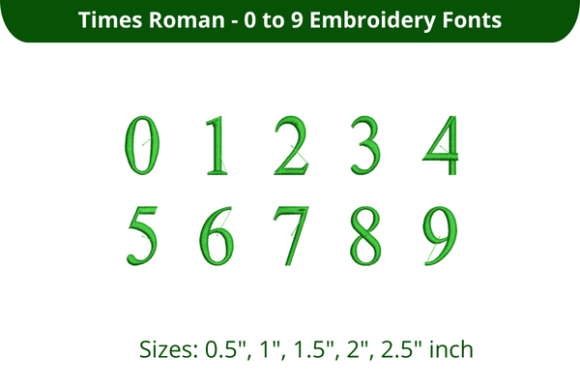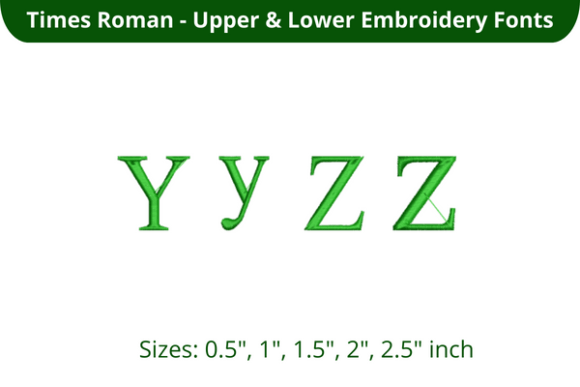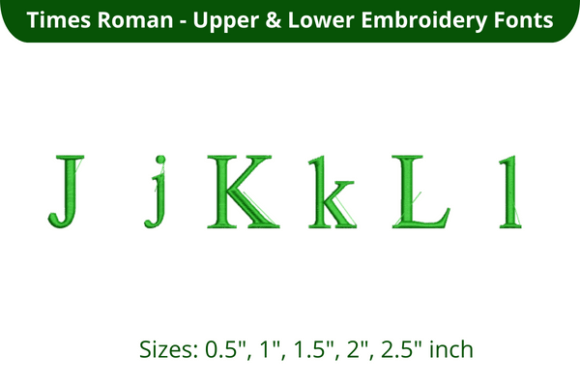
Times Roman Font DEF
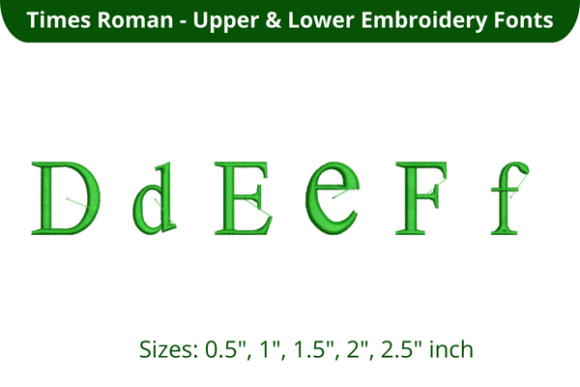
Times Roman Font DEF isn’t just another digitized typeface—it’s a precision-crafted embroidery font designed for clarity, consistency, and quiet elegance on fabric. Unlike generic stitch files that sacrifice legibility at small sizes or struggle with tight curves and fine serifs, Times Roman Font DEF is engineered from the ground up for machine embroidery: balanced letter spacing, optimized stitch density, clean transitions between strokes, and thoughtful underlay strategies that prevent puckering on lightweight cottons, linens, and even stable knits. It retains the authoritative warmth of classic serif typography while meeting the technical demands of modern embroidery hardware and software.
Why Embroidery Fonts Are Evolving Beyond Utility
A decade ago, most embroidery fonts were functional—blocky, simplified, or overly decorative—because they had to prioritize machine reliability over typographic nuance. Today’s users expect more. Whether you’re stitching monogrammed napkins for a boutique wedding brand, labeling organic cotton tote bags for a sustainable lifestyle shop, or personalizing graduation caps with names and dates, the font becomes part of your brand’s voice. Times Roman Font DEF responds to this shift: it offers readability at 8 mm height, graceful contrast between thick and thin strokes, and a timeless presence that avoids trend fatigue. That’s why professionals in apparel, home goods, education, and event design are choosing serif-based embroidery fonts—not as nostalgia, but as intentionality.
From Generic to Distinctive: The Rise of Context-Aware Personalization
Consumers no longer see personalization as a novelty—they expect it as baseline quality. A custom-embroidered name on a child’s backpack isn’t just practical; it signals care, attention to detail, and respect for individuality. But “personalization” doesn’t mean slapping on any font that fits. Poorly spaced letters, inconsistent baseline alignment, or jagged serifs undermine trust—even if the customer never articulates why. Times Roman Font DEF addresses this by preserving typographic hierarchy: capital letters maintain proportional weight, lowercase “e” and “a” open cleanly without distortion, and punctuation marks (like periods and commas) are sized and placed to support rhythm rather than interrupt it. This matters when embroidering quotes on throw pillows or commemorating milestones on heirloom quilts—where meaning and material coexist.
Real-World Workflow Integration
Times Roman Font DEF ships with industry-standard file formats—including .dst, .pes, .jef, .exp, and .vp3—so it works across Brother, Janome, Bernina, Husqvarna Viking, and Baby Lock machines without conversion gymnastics. More importantly, it’s pre-digitized with intelligent pull compensation and reduced jump stitches, which cuts down on thread breaks and re-hooping during multi-color runs. For freelancers managing client projects across platforms, that means fewer revisions tied to legibility issues. For educators running textile labs or after-school sewing programs, it means students spend less time troubleshooting stitch-outs and more time exploring composition and layout.
Consider a small business owner launching a line of linen tea towels. She wants to offer customization—initials centered at the bottom edge—but needs fonts that scale cleanly from 10 mm to 25 mm without losing definition. Times Roman Font DEF delivers that flexibility. Its consistent stem width and open counters ensure “M,” “W,” and “R” remain distinct even at smaller sizes, unlike many script or condensed fonts that blur together under 12 mm. Likewise, its moderate x-height improves readability on textured weaves where fine details might otherwise disappear.
Beyond Names and Dates: Expanding the Use Case
While Times Roman Font DEF excels at names, dates, and short quotes—ideal for baby blankets, anniversary handkerchiefs, or conference lanyards—it also supports subtle branding applications. A wellness studio might use it to embroider “breathe” or “still” on cotton meditation cushions. A university department could feature faculty names and titles on archival-quality lab coats. A freelance illustrator might pair it with hand-drawn motifs on limited-run tote bags, letting the font anchor the composition with quiet authority.
This versatility reflects broader shifts in how people engage with handmade and semi-custom goods. Buyers aren’t just purchasing fabric—they’re investing in objects that carry narrative weight. The font choice participates in that storytelling. Times Roman Font DEF doesn’t shout; it affirms. It doesn’t distract; it clarifies. And because it’s built for real-world materials—not just idealized test swatches—it performs consistently across blends, wovens, and stabilized knits.
Technical Thoughtfulness Meets Creative Freedom
What sets Times Roman Font DEF apart isn’t just aesthetics—it’s how thoughtfully its digitization anticipates common pain points. For example, lowercase “g” and “y” include reinforced under-stitching at the descender curve to prevent lifting on loosely woven fabrics. Uppercase “S” uses tapered entry/exit points to avoid unsightly stitch clusters. Even the period is sized and positioned to sit flush with the baseline—not floating or sinking—so lines of text align cleanly across multiple rows.
That level of detail matters when you’re batch-embroidering 50+ items for a corporate gifting campaign or preparing samples for a craft fair booth. It reduces the need for manual editing in Wilcom, Embrilliance, or Hatch—saving hours without compromising creative control. And because the files are layered and named logically (e.g., “TimesRomanDEF_Capitals_12mm.pes”), designers can mix case styles confidently, knowing sizing and spacing remain harmonious.
Choosing the Right Tool for Meaningful Detail
In an era where AI-generated patterns flood marketplaces and mass-produced embroidery kits dominate big-box retailers, intentional tool selection has become a quiet act of professional discernment. Times Roman Font DEF appeals to creators who value craftsmanship over convenience alone—who understand that a well-chosen font contributes to perceived value, longevity, and emotional resonance. It’s not about chasing every new trend; it’s about selecting resources that serve both current needs and future iterations of your work.
If you're building a portfolio of custom apparel, developing curriculum for textile arts education, or launching a small-batch home goods brand, consider how often names, dates, and short phrases appear in your output. Then ask: does your current embroidery font support those moments with consistency—or does it introduce friction? Times Roman Font DEF removes guesswork without removing expressiveness. It gives you typographic reliability so you can focus on what matters most: the person receiving the item, the story behind the date, or the intention behind the quote.
Looking Ahead—Without Overpromising
Embroidery software continues to improve, and machine capabilities expand yearly—but human expectations for quality, authenticity, and attention to detail evolve faster. Fonts like Times Roman Font DEF reflect that reality: they’re not futuristic novelties, but grounded upgrades. They respond to real constraints—fabric behavior, machine tolerance, visual perception at scale—and do so without requiring specialized training or expensive add-ons.
As hybrid workflows grow more common—blending digital design, physical making, and direct-to-consumer fulfillment—the tools we rely on must bridge those spaces seamlessly. Times Roman Font DEF does exactly that: it lives comfortably in your embroidery software library, translates faithfully onto cotton twill or bamboo jersey, and reads clearly whether viewed from two feet away on a wall hanging or held in hand on a keepsake bookmark.
Ultimately, the best embroidery fonts don’t call attention to themselves. They recede just enough to let the message—and the maker—shine through. Times Roman Font DEF achieves that balance: technically sound, aesthetically coherent, and quietly confident in its purpose.