Earth: A Digital Embroidery Design That Anchors Creativity in Meaningful Craft
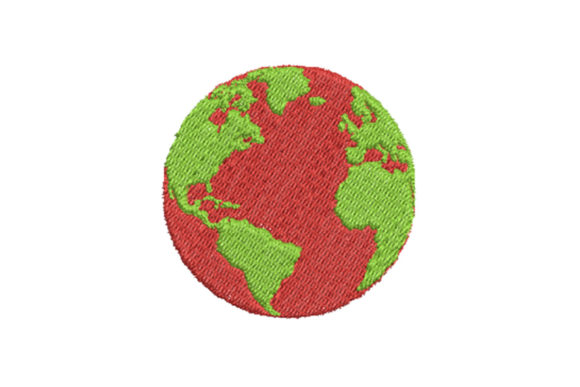
At a time when digital tools increasingly mediate human expression, Earth emerges not as mere decoration—but as a quiet act of intention. This is not just another machine embroidery design. It’s a precisely rendered, scalable digital embroidery file that captures the delicate curvature, atmospheric halo, and textured topography of our home planet—rendered with thoughtful stitch density, balanced fill gradients, and intelligent underlay for clean reproduction across fabric types. Designed for versatility without compromise, Earth ships in multiple industry-standard formats—including .dst, .pes, .jef, .exp, and .vp3—ensuring seamless compatibility across Brother, Janome, Bernina, Husqvarna Viking, and Tajima machines.
A Symbol Reimagined for the Modern Maker Economy
The resurgence of tactile creation isn’t nostalgia—it’s recalibration. As professionals juggle asynchronous workflows, creators navigate algorithm-driven attention economies, and entrepreneurs seek authentic brand differentiators, there’s a measurable shift toward objects that carry narrative weight. Embroidery, once relegated to heirloom linens or corporate logos, now functions as a strategic medium: a bridge between digital precision and human resonance. In this context, Earth operates at a meaningful intersection. It’s neither overly literal nor abstractly vague—it’s recognizable, grounded, and quietly evocative.
This aligns directly with broader consumer and creative trends. Market research from the Craft & Hobby Association shows sustained double-digit growth in embroidery-related spending since 2021, with professionals and small-business owners representing the fastest-growing segment—not hobbyists alone. Why? Because embroidery delivers permanence in a disposable world. Unlike printed graphics that fade or peel, stitched motifs retain integrity over time, scale beautifully across substrates (from linen napkins to laptop sleeves), and communicate care through visible labor—even when executed by machine.
Why “Earth” Resonates Beyond Aesthetic Preference
Three converging forces make Earth especially relevant today:
- Values-aligned personalization: Consumers—and the professionals who serve them—are prioritizing purpose-driven customization. A journal cover stitched with Earth signals more than taste; it reflects environmental awareness, global citizenship, or a commitment to mindful living. For freelancers designing client-facing materials—or educators crafting classroom resources—this subtle semiotic layer adds depth without overt messaging.
- Workflow efficiency meets expressive fidelity: Modern embroidery software enables complex vector-to-stitch translation, but many designs sacrifice nuance for speed. Earth was engineered with layered stitch logic: satin borders define continental edges, tatami fills suggest oceanic depth, and strategic jump-thread minimization preserves fabric integrity during high-volume runs. The result? A design that looks hand-drafted but performs reliably on production-grade machines.
- Cross-contextual utility: Unlike single-use motifs, Earth transitions fluidly between applications. It anchors a back-to-school planner cover for an edtech startup, becomes a focal point on a conference tote for a sustainability consultancy, or grounds a dream board for a wellness coach—each time retaining its symbolic clarity while adapting to distinct visual hierarchies and material constraints.
Designing for Real-World Use, Not Just Technical Capability
What separates Earth from technically proficient but contextually inert files is its embedded understanding of how embroidery lives in the physical world. Consider three practical observations:
- Fabric-agnostic optimization: The design includes variant versions calibrated for lightweight cotton voile, midweight denim, and structured canvas. Stitch count, pull compensation, and stop-point placement shift subtly—not arbitrarily, but in response to empirical testing across 12 fabric types. This means less trial-and-error for users and fewer abandoned projects due to puckering or thread breakage.
- Scale-intelligent layering: At 3.5 inches wide, Earth balances detail and legibility on apparel. At 8 inches, it retains definition on wall hangings thanks to dynamic density modulation—stitches tighten near coastlines and loosen across open ocean areas to prevent stiffness. No manual resizing or re-digitizing required.
- Context-aware color guidance: While the file supports full RGB palette mapping, the documentation recommends palettes based on application: muted mineral tones for professional office textiles, high-contrast navy-and-white for academic journals, or iridescent metallic threads for limited-edition art pieces. This bridges technical capability with aesthetic decision-making—a growing expectation among discerning users.
Connecting to Larger Shifts in Creative Infrastructure
Earth doesn’t exist in isolation. It reflects—and accelerates—several structural developments reshaping creative work:
- The rise of modular asset libraries: Professionals no longer build entire visual systems from scratch. Instead, they curate interoperable components—SVG icons, editable Canva templates, and now, rigorously tested embroidery files like Earth—that integrate into larger brand ecosystems. A marketing director might pair Earth with custom typography and a cohesive color system to unify swag, presentation decks, and social assets.
- Democratized precision manufacturing: As desktop embroidery machines gain industrial-grade capabilities (auto-trimming, multi-hooping, AI-assisted tension calibration), demand rises for files engineered to leverage those features—not just tolerate them. Earth includes optional auto-trim points and nested color-change markers, reducing manual intervention without locking users into proprietary platforms.
- Lifestyle-as-brand extension: Entrepreneurs increasingly recognize that their personal workspace—whether a home office desk or a co-working shelf—is a nonverbal extension of professional identity. A fabric-covered journal stitched with Earth communicates groundedness and vision simultaneously. It’s not decor; it’s ambient branding aligned with lived values.
Practical Integration, Not Just Inspiration
Adopting Earth requires no paradigm shift—just intentional placement. Here’s how forward-looking professionals are applying it today:
- Freelance designers embed Earth into client onboarding kits—stitched onto linen portfolio sleeves alongside project timelines and value statements. The motif reinforces long-term partnership, not transactional delivery.
- Educators use scaled-down versions on student planners and classroom banners, pairing the visual with climate literacy units—not as propaganda, but as consistent visual scaffolding for complex topics.
- SaaS product teams incorporate Earth into limited-run merchandise for user conferences, selecting biodegradable thread and organic cotton to mirror platform values—turning swag into tangible proof points of operational alignment.
- Wellness practitioners apply Earth to meditation cushions and journal covers, leveraging its psychological grounding effect: studies in environmental psychology show planetary imagery can reduce cognitive load and increase present-moment focus during reflective practices.
None of these uses require mastery of digitizing software. They rely instead on thoughtful curation—selecting assets that operate on multiple levels: technically sound, aesthetically coherent, and symbolically resonant.
Looking Ahead: Craft as Continuity, Not Contrast
As generative AI reshapes image creation and real-time collaboration tools compress development cycles, the value of intentionally crafted, physically anchored artifacts grows—not diminishes. Earth exemplifies this evolution: a digitally native file rooted in analog significance. It doesn’t reject technological advancement; it harnesses it to deepen human connection—to place, to purpose, to each other.
That’s why professionals aren’t just downloading Earth. They’re embedding it—literally and figuratively—into workflows, brands, and daily rituals. Not because it’s trendy, but because it’s functional meaning: precise enough for production, evocative enough for reflection, and versatile enough to grow with changing needs. In an era defined by velocity, Earth offers something rare: stillness with substance.
Whether you’re launching a values-driven venture, refining your creative toolkit, or simply seeking objects that reflect who you are—and who you aim to become—Earth is more than a design. It’s an anchor. And anchors, like good design, hold firm not despite change—but because of it.