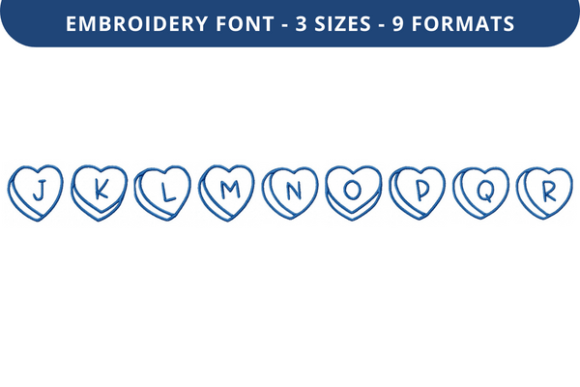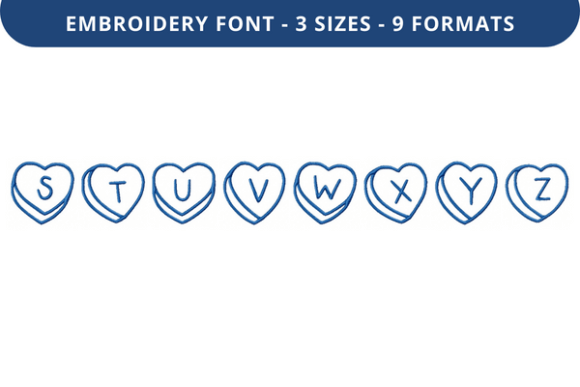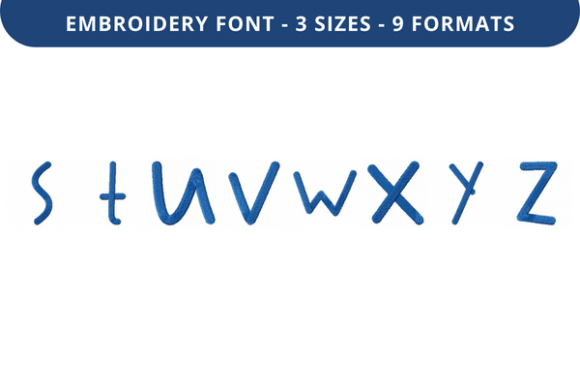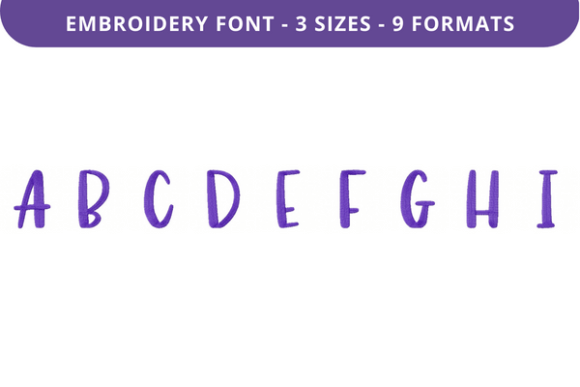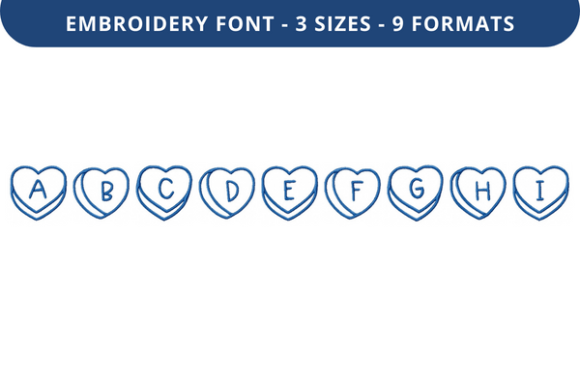
Talking Hearts Font a to I: Personalize Fabric Projects with Confidence
When you're stitching names onto baby blankets, commemorating milestones on quilts, or adding heartfelt quotes to heirloom pillows, the right embroidery font makes all the difference. Talking Hearts Font a to I is a high-quality, machine-embroidery-specific typeface designed for clarity, charm, and consistent stitch performance — especially at smaller sizes. Unlike generic fonts adapted for embroidery, this collection was digitized from the ground up to honor delicate curves, balanced spacing, and clean letterforms that translate beautifully across fabric types and hoop sizes.
Many crafters face familiar hurdles: letters that pucker or distort on lightweight cotton, inconsistent stitch density between uppercase and lowercase characters, or file incompatibility across machines. Others struggle to find fonts that feel personal without sacrificing professionalism — something warm enough for a child’s onesie yet refined enough for a wedding keepsake. These aren’t just technical frustrations; they’re barriers to expressing meaning through stitch. That’s where Talking Hearts Font a to I steps in — not as another decorative option, but as a reliable, purpose-built tool for turning intention into embroidered reality.
Why Letter Clarity Matters More Than You Think
In embroidery, every letter is a sequence of calculated stitches — not pixels. Poorly digitized fonts often crowd small letters (like “a”, “e”, or “i”) or overfill tall ones (like “t” or “l”), causing thread breaks, fabric distortion, or unreadable results. Talking Hearts Font a to I solves this by optimizing each character individually: lowercase letters maintain generous counter space, ascenders and descenders are proportionally scaled, and kerning is pre-adjusted to prevent awkward gaps or collisions. The result? A cohesive, legible line of text — whether you’re stitching “Emma & Liam • 2024” across a linen tea towel or “You Are Loved” on a toddler’s backpack.
Real Applications That Bring Projects to Life
Talking Hearts Font a to I shines where personalization meets practicality. Consider these everyday uses:
- Baby and children’s items: Stitch names, birth dates, or sweet phrases like “Little One” on burp cloths, bibs, or nursery wall hangings — with soft edges that won’t irritate sensitive skin.
- Home textiles: Embellish pillowcases, napkins, or quilt labels with monograms, family names, or seasonal greetings. Its balanced weight holds up beautifully on medium-weight cotton or linen blends.
- Gifts with meaning: Create custom towels for newlyweds (“The Smiths • Est. 2024”), memorial handkerchiefs (“Forever in Our Hearts”), or graduation robes with names and years — all in one clean, readable line.
- Small-batch makers: If you sell personalized goods, this font helps you deliver consistent, professional results faster — reducing re-stitching time and boosting client trust.
Unlike script fonts that require precise alignment or blocky fonts that feel impersonal, Talking Hearts Font a to I strikes a thoughtful middle ground: friendly without being cutesy, elegant without being stiff. It reads well even at 1.2 inches tall — a critical advantage when working with tight hoop constraints or dense fabric weaves.
Seamless Compatibility Across Your Workflow
No one wants to juggle converters, troubleshoot missing files, or guess which format works with their machine. Talking Hearts Font a to I ships with multiple industry-standard embroidery file formats — including .dst, .pes, .jef, .hus, and .exp — so it integrates smoothly whether you use a Brother, Janome, Bernina, Baby Lock, or Husqvarna Viking machine. Each format is verified for stitch integrity, not just renamed or auto-converted. That means fewer surprises during hooping, less trial-and-error testing, and more time spent creating.
For best results, pair Talking Hearts Font a to I with stabilizer suited to your fabric: tear-away for stable wovens, cut-away for knits or stretchy fabrics, and lightweight fusible for delicate silks or voiles. And remember — while this font performs beautifully at 1–2 inches tall, avoid scaling below 0.8 inches without testing first. Embroidery isn’t like screen display; tiny letters need adjusted density and slower speeds to stay crisp.
Different Needs, Same Thoughtful Design
How you use Talking Hearts Font a to I depends on your goals — and that’s by design. Hobbyists appreciate its plug-and-play simplicity: open the file, select your letters, and stitch. No digitizing software required. Small-business owners value its consistency across orders — ensuring every “Sophie • 2025” looks identical, batch after batch. Educators and therapists use it to create tactile name tags for students or sensory-friendly labels for classroom materials. Even experienced digitizers sometimes pull individual letters from the set to build custom monograms or combine them with other elements — thanks to uniform baseline alignment and predictable stitch count per character.
If you’re new to embroidery fonts, start simple: choose three letters (a name, initials, or a short word), test on scrap fabric with your usual stabilizer and thread, and adjust tension if needed. If you’re upgrading from free or low-res fonts, notice how much cleaner the curves look — especially in letters like “a”, “g”, and “s”. That refinement isn’t cosmetic; it’s the difference between a project that feels handmade *and* intentional.
Making Meaning Stick — Literally
At its core, Talking Hearts Font a to I supports what matters most: connection. Whether you’re marking a milestone, honoring a memory, or simply making something uniquely yours, the words you choose deserve to be seen — clearly, gracefully, and without compromise. This font doesn’t shout. It invites. It’s the quiet confidence behind a perfectly stitched “Welcome Home” on a front-door runner, or the gentle sincerity of “Always” on a friendship bracelet.
And because it’s built for real-world use — not just aesthetics — you’ll spend less time troubleshooting and more time enjoying the rhythm of the needle, the texture of the fabric, and the quiet satisfaction of creating something that carries meaning, one thoughtful stitch at a time.