2nd Grade Let’s Do This: A Practical Guide for Embroidery Enthusiasts
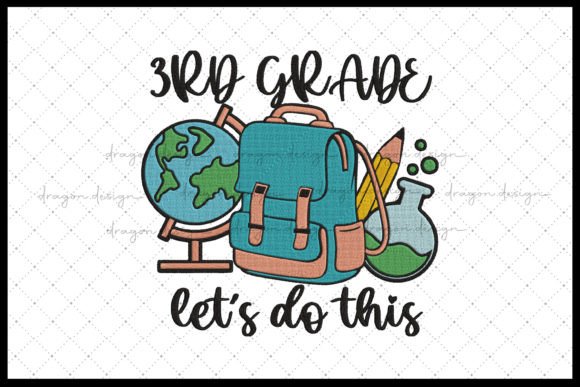
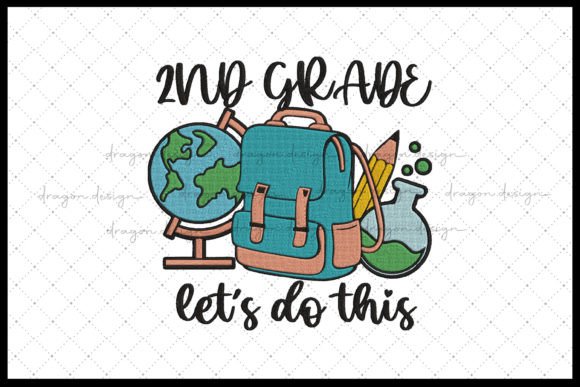
“2nd Grade Let’s Do This” is a machine embroidery design tailored for back-to-school creativity—especially for those who enjoy personalizing clothing, accessories, and home items with cheerful, age-appropriate motifs. Unlike generic school-themed designs, it features clean lettering, balanced spacing, and a friendly, confident tone that resonates with young learners and their caregivers. The phrase itself functions as both encouragement and identity marker—ideal for labeling backpacks, decorating lunchboxes, or adding charm to classroom decor.
What Sets 2nd Grade Let’s Do This Apart?
At its core, 2nd Grade Let’s Do This is not just text—it’s a thoughtfully digitized embroidery file optimized for clarity at small to medium sizes (typically 3–5 inches wide). Its distinctiveness lies in three practical attributes:
- Digitization quality: Stitches are layered to minimize thread breaks and puckering, especially important when embroidering on lightweight cottons or blends commonly used in kids’ apparel.
- Format versatility: It ships with multiple file types—including PES, DST, EXP, JEF, and VP3—so it works across most major embroidery machines without conversion hassles.
- Context-aware sizing: The design includes recommended dimensions for common applications: 3.2" for tote bags, 4.0" for t-shirts, and scaled-down versions suitable for patches or iron-on transfers.
This isn’t a one-size-fits-all font-based monogram. It’s a curated composition—each letter spaced for legibility, each curve digitized to flow naturally under needle movement. That attention shows up in the final stitch-out: no jagged edges, no floating threads, and consistent density across fabric types.
How It Fits Into Broader Embroidery Workflows
Embroiderers evaluating 2nd Grade Let’s Do This often compare it against alternatives like custom lettering software, free SVG downloads, or pre-made monogram packs. Each has tradeoffs:
- Custom lettering tools (e.g., built-in machine editors or software like Embrilliance) offer full control—but require time, technical familiarity, and testing to achieve balanced stitch density and underlay. For a quick, reliable result, 2nd Grade Let’s Do This saves hours of trial-and-error.
- Free SVG or PNG files must be converted to embroidery formats. That process introduces variables: auto-digitizing engines may misjudge pull compensation or under-stitching, leading to distortion on stretchy fabrics or uneven fills on twill.
- Generic “Back to School” bundles often include crowded scenes—buses, apples, pencils—that compete visually with text. In contrast, 2nd Grade Let’s Do This centers the message, making it easier to read and more adaptable across surfaces.
It also differs from educational-themed clip art in how it handles scale. Many school graphics lose definition below 3 inches; this design remains legible down to 2.5", which matters when embroidering on narrow waistbands, pencil cases, or child-sized pillowcases.
Real-World Use Cases—and Where It Shines Most
Practicality matters more than novelty when choosing embroidery content. Here’s where 2nd Grade Let’s Do This delivers measurable value:
- Classroom organization: Teachers use it to label cubbies, supply bins, and reading logs. Because the text is bold but not loud, it supports visual calm while still being functional.
- Personalized gifts: Parents embroider it onto denim jackets, canvas backpacks, or drawstring bags—items that see daily wear and benefit from durable, well-digitized stitching.
- Home learning spaces: It appears on wall hangings, framed hoop art, or cushion covers in study nooks—adding motivation without cluttering the environment.
In each case, the strength isn’t just aesthetic—it’s consistency. When you’re stitching 20+ identical items (say, for a second-grade class party), predictable performance across machines and fabrics reduces rework and thread waste.
Limitations to Acknowledge Upfront
No embroidery file is universally ideal—and transparency helps avoid frustration. 2nd Grade Let’s Do This performs best under specific conditions:
- Fabric compatibility: Works reliably on stable weaves (cotton, linen, mid-weight twill) and stabilized knits. On highly elastic fabrics like jersey or performance blends, additional stabilizer (e.g., cutaway + tear-away combo) is advisable—and test stitching is recommended.
- Color flexibility: The design doesn’t include color-separation maps or thread charts. Users choose thread colors freely, but should consider contrast: light text on dark fabric requires denser top stitches, which may affect drape on lightweight materials.
- Customization limits: While scalable, it’s not editable as vector art. You can’t easily swap “2nd” for “3rd” or add a name without redigitizing—or using software that supports object-level editing. For fully modular needs, a monogram builder may be more appropriate.
When to Choose It—and When to Look Elsewhere
Consider 2nd Grade Let’s Do This if you prioritize:
- A ready-to-stitch solution with minimal prep,
- Legibility and durability across varied garment types,
- Consistency across multiple units (e.g., gifts for siblings or classroom sets),
- Compatibility with common home and small-business embroidery machines.
It’s less suited for projects requiring:
- Exact brand-color matching (no Pantone references included),
- Integration into larger, multi-element scenes (e.g., combining with a custom mascot or photo-realistic illustration),
- Non-Latin character support (it uses standard Western alphanumeric characters only),
- Large-format applications above 6 inches—where scaling may soften edge definition unless manually re-digitized.
Making the Decision Fit Your Workflow
Ask yourself three questions before downloading or purchasing:
- What’s my primary output surface? If most of your work is on woven cotton (tote bags, tea towels, button-up shirts), 2nd Grade Let’s Do This aligns well. If you frequently embroider on fleece, velvet, or leather, examine the file’s stitch count and density notes first—some versions run lighter than others.
- How much time do I have for prep? If you’re stitching the night before a school event, a plug-and-play file saves effort. If you’re building a long-term library of reusable assets, investing in editable source files may pay off over time.
- Do I need scalability across grade levels? Some users buy multiple grade-specific versions (e.g., “1st Grade Let’s Do This”, “2nd Grade Let’s Do This”) to maintain continuity year after year. Others prefer flexible templates they can update manually. Neither approach is superior—it depends on volume, timeline, and comfort with digitizing tools.
Finally, check whether the vendor provides support documentation—not just format lists, but actual guidance on stabilizer recommendations, optimal needle types (e.g., size 75/11 sharp for cotton, ballpoint for knits), and troubleshooting tips for skipped stitches or thread nesting. That kind of detail signals thoughtful curation, not just file bundling.
In summary, 2nd Grade Let’s Do This fills a specific, useful niche: dependable, joyful, school-year-ready embroidery that balances personality with practicality. It won’t replace custom design work—but for many makers, it removes friction without sacrificing quality.